
December and January are the months when Singapore office managers ask a very practical question. Should we move to a self service cafeteria model, or keep running daily staffed lunch lines? Many companies assume that a self service cafeteria is a simple way to reduce cost. In reality, the format only works well under the right conditions.
At Catering Corner, we approach this as part of structured cafeteria management. A self service cafeteria can be efficient, stable, and reliable. But without the right planning, it can quickly become messy and frustrating for staff. This article walks through exactly when the model succeeds and when it struggles in real Singapore workplaces.
How Does a Self Service Cafeteria Differ from Staffed Cafeteria Service in Singapore?
Operationally, a self service cafeteria is very different from traditional cafeteria service.
Operational Flow Differences
In a staff cafeteria service environment, meals are prepared continuously throughout the lunch window. Service staff plate food, manage queues, and interact directly with employees. A cafeteria manager can make quick corrections on the spot because the team is fully present.
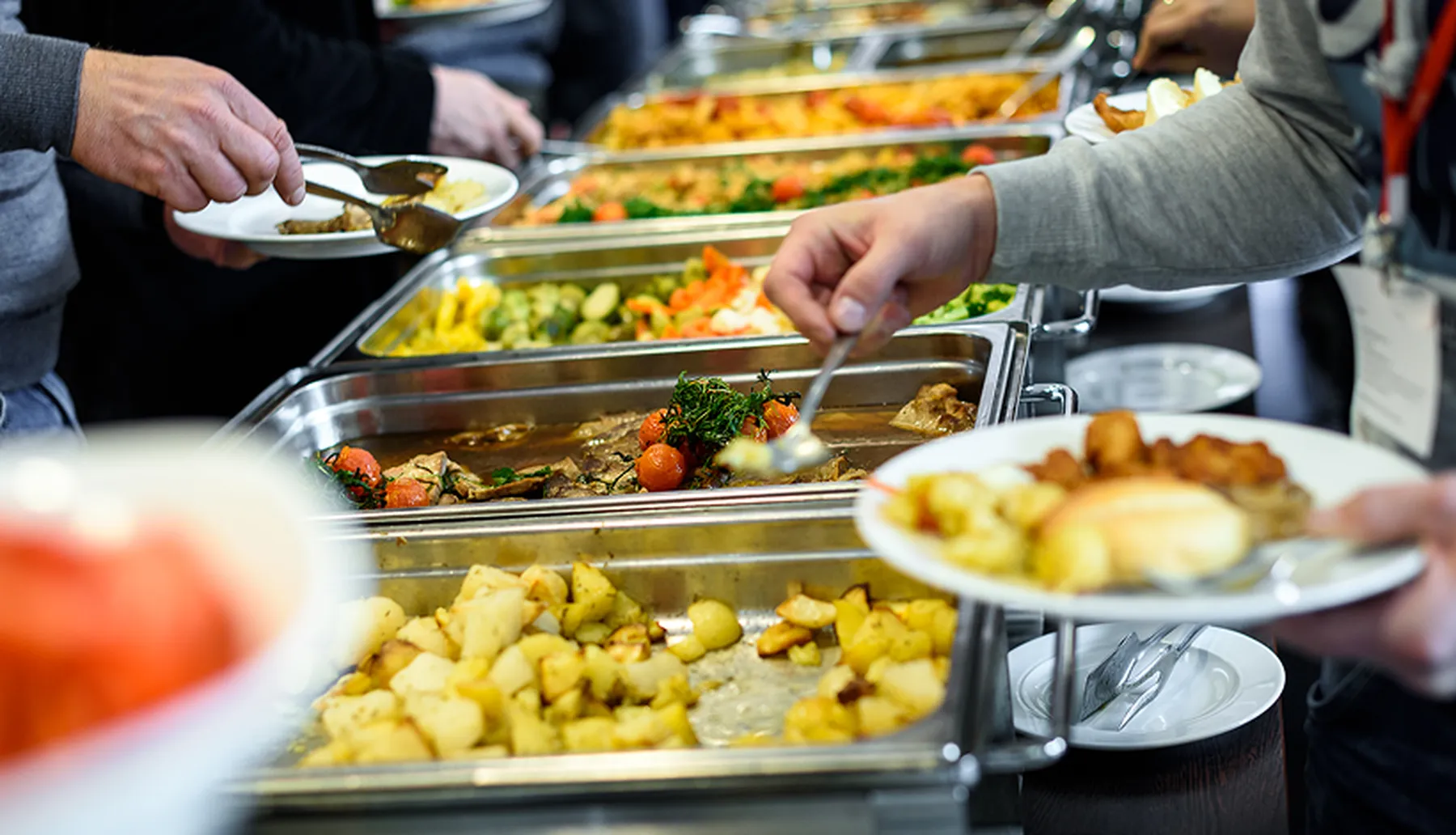
With a self service cafeteria, food is prepared mostly in advance and placed at service stations. Employees serve themselves. That means success depends heavily on timely replenishment, clear layouts, and disciplined back-end support. If preparation quantities are misjudged, trays empty too early or remain untouched at the end of lunch.
Manpower and Management Differences
A self service cafeteria usually reduces front-line manpower. However, it increases the importance of the cafeteria manager and kitchen team. Someone must monitor food levels, cleanliness, and traffic flow. Without active oversight, a self service line can look unattended very quickly.
Many offices combine the model with onsite catering support. This hybrid approach keeps food coming from the kitchen while staff numbers remain controlled. It works, but only when roles and schedules are clearly defined.
When Do Self Service Cafeterias Work Best for Offices in Singapore?
The model can be very effective in the right setting.
 Low to Medium Traffic Offices
Self service cafeterias work best where daily headcount is relatively stable and lunch peaks are not extreme. In these environments, cafeteria service can be simplified to staple rotations, basic multicultural menus, and predictable meal windows.
For offices that only require 50 to 150 meals per day, a self service cafeteria often keeps everyone fed without long queues. Waste levels also remain manageable because volumes are easier to control.
Space-Constrained Workplaces
Singapore offices frequently operate with limited dining space. A self service cafeteria fits well when there is no room for multiple serving counters. Compact pantries or small cafeterias benefit from a centralised counter where staff lunch can be offered in a simple format.
In these cases, the format complements daily office food catering by reducing the need for large dining infrastructure.
When Do Self Service Cafeterias Fail in Singapore Workplaces?
This is where most companies underestimate the risk.
 High Traffic Lunch Peaks
In large Singapore workplaces with very short lunch windows, a self service cafeteria often struggles. When hundreds of employees arrive at once, replenishment becomes the bottleneck. Trays run out, queues form around beverage points, and the whole cafeteria service experience feels chaotic.
That is when companies realise they still need stable onsite catering services with enough front-line support. For high-volume staff lunch environments, a staffed cafeteria manager and serving team usually perform better than a pure self service model.
Complex Menu Environments
If an office requires many cuisines, strict dietary separation, or hot cooked-to-order dishes, a self service cafeteria in Singapore can increase waste and slow service. Elaborate menus do not repeat well day to day. Employees take small portions from multiple dishes and leave more unfinished plates.
In these environments, a traditional cafeteria service format gives the cafeteria manager more control over portions and menu boundaries.
Food Safety and Freshness Considerations in Singapore
Whatever the format, food safety remains critical in Singapore.
Handling Hot Food Properly
Self service cafeteria stations must maintain proper temperatures and shelf life. In Singapore’s regulated food environment, meals left on trays too long can lose freshness. A cafeteria manager needs to ensure food is covered, labelled, and replaced within safe time cycles.
This is why many organisations still rely on onsite catering kitchens even when using self service lines. The kitchen provides fresh hot food continuously, while the stations serve as distribution points.
Cleanliness and Traffic Flow
Self service cafeterias require more frequent cleaning. Spills, used utensils, and tray returns must be managed carefully. Without daily oversight, hygiene standards dip. Systems and staff discipline are what keep cafeteria service safe for employees.
Briefing Mistakes Companies Make When Switching to Self Service Cafeterias
The format decision often goes wrong because of poor scoping.
Assuming Self Service Is Automatically Cheaper
Many procurement teams believe moving to self service cafeteria lines guarantees lower cost. In reality, food costs can rise if waste increases. Manpower savings on the service floor are lost when production volumes are not adjusted properly.
Corporate cafeteria management should always review real usage before making this switch.
Not Aligning Format to Real Usage
Another mistake is changing formats without considering how staff actually eat. If attendance fluctuates or lunch peaks are tight, the self service cafeteria may be the wrong model. Good cafeteria managers and HR teams need to assess whether onsite catering services are still required to keep meals stable.
How Catering Corner Supports Data-Led Cafeteria Management
At Catering Corner, we treat workplace dining as a system. Whether a company uses cafeteria service staff or a self service cafeteria format, structured cafeteria management always relies on data and accountability.
Companies often integrate additional options such as food vending machines or flexible onsite catering services during low-attendance periods. The key is to match the right model to the right environment so staff lunch remains reliable and cost-efficient.
Make the Right Format Choice for Your Office Dining in Singapore
Better corporate cafeteria management decisions start with understanding one clear difference early. A self service cafeteria and daily staff lunch lines are not the same. A well-run cafeteria manager uses a canteen management system to decide which format fits their office in Singapore.
If you are unsure whether a self service cafeteria is right for your workplace, speak directly with the Catering Corner team via our contact page to review your current setup and plan improvements.


