
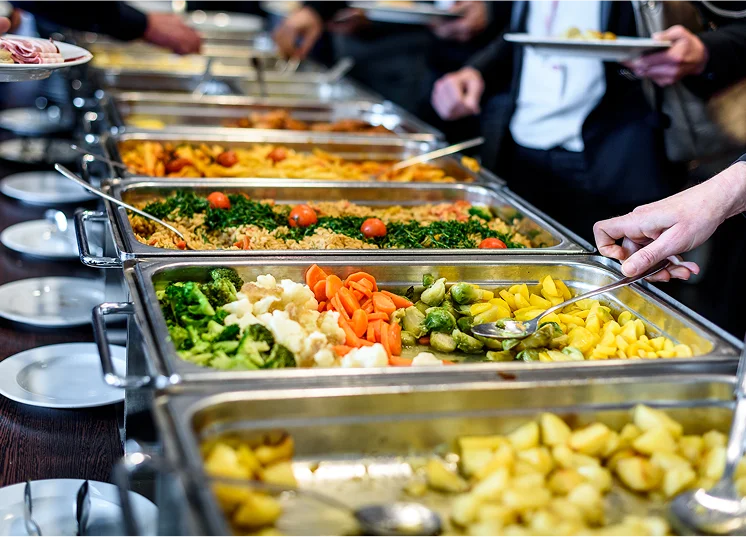
In Singapore’s fast-paced work environment, staff canteen management is no longer a back-office afterthought. It plays a direct role in employee productivity, morale, and operational efficiency. For organisations managing large teams, rotating shifts, or high-density workplaces, how a staff cafeteria is planned, operated, and continuously improved has real business impact.
At Catering Corner Pte Ltd, we approach cafeteria management differently. Built by ex-consultants, not traditional caterers, we apply structure, accountability, and data to staff cafeteria operations. The goal is simple: make workplace dining work better for employees and employers alike.
This article breaks down why staff canteen management matters, how it affects productivity in Singapore workplaces, and what organisations should look for in modern cafeteria management and canteen management systems.
The Link Between Staff Canteen Management and Productivity
Employee productivity is shaped by daily routines. Meals are one of the few universal touchpoints every employee experiences, regardless of role or seniority. Poorly run staff canteens create friction. Well-managed staff cafeterias remove it.
Reduced Downtime During Staff Lunch
In many Singapore offices and industrial sites, staff lunch windows are tight. When a staff canteen is disorganised, queues build up, food runs out, or service slows down. Employees return late, stressed, or skip meals altogether.
Effective staff canteen management focuses on:
- Accurate demand forecasting during peak lunch hours
- Smooth self service cafeteria flow
- Clear zoning for ordering, collection, and seating
By reducing waiting time, employees spend less time queueing and more time resting. That directly supports productivity in the second half of the workday.
Better Energy Levels Through Consistent Food Quality
Food quality affects focus. Heavy, repetitive, or poorly balanced meals often lead to post-lunch fatigue. A well-managed staff cafeteria offers variety, portion control, and predictable quality.
Strong cafeteria management ensures:
- Balanced menus across proteins, vegetables, and carbohydrates
- Rotation to prevent menu fatigue
- Consistent standards across vendors
This matters especially for large workplaces relying on office food catering or onsite catering services every single day.
Why Staff Canteen Management Is Especially Critical in Singapore
Singapore’s workplace realities make staff canteen management more complex than in many other markets.
High Workforce Density and Limited Lunch Windows
Many corporate offices, logistics hubs, and public sector facilities operate with:
- High headcount
- Fixed lunch breaks
- Limited surrounding food options
Without proper canteen management, congestion becomes unavoidable. A capable cafeteria manager uses data and planning to design service flow that works within these constraints.
Diverse Dietary Requirements
Staff cafeterias in Singapore must cater to diverse needs, including halal requirements, vegetarian options, and cultural preferences. Managing this manually is inefficient.
Modern corporate cafeteria management relies on:
- Menu data tracking
- Feedback loops from staff
- Vendor accountability frameworks
This ensures inclusivity without compromising speed or cost control.
What Effective Staff Canteen Management Looks Like Today
Traditional institutional catering focused on food delivery. Modern staff canteen management focuses on systems, performance, and outcomes.
Data-Led Cafeteria Management
A data-led cafeteria management approach tracks what matters:
- Participation rates by meal and time slot
- Menu popularity and wastage levels
- Peak demand patterns
This data informs better decisions on menu planning, staffing, and procurement. Over time, it leads to higher satisfaction and lower operational waste.
Clear Ownership and Accountability
One of the biggest failures in staff canteen operations is unclear ownership. When issues arise, no one is accountable.
An owner-managed cafeteria service provider takes responsibility for:
- Vendor performance
- Service consistency
- Continuous improvement
This is where professional cafeteria service providers stand apart from ad-hoc catering services in Singapore.
The Role of the Cafeteria Manager
A cafeteria manager is not just overseeing food service. They are managing an operational ecosystem.
Operational Coordination
A competent cafeteria manager ensures:
- Vendors adhere to agreed service levels
- Food preparation aligns with actual demand
- Self service cafeteria stations are replenished on time
This reduces friction during staff lunch and prevents service breakdowns.
Real-Time Problem Solving
Daily operations are unpredictable. Equipment fails. Demand spikes. Staff shortages happen.
Strong cafeteria management includes real-time response protocols, not reactive firefighting. This operational maturity is what separates professional corporate cafeteria management companies from basic catering vendors.
Self Service Cafeteria Models and Productivity
Self service cafeteria formats are increasingly common in Singapore workplaces, especially where speed matters.
Why Self Service Cafeterias Work
When designed properly, a self service cafeteria:
- Speeds up food collection
- Reduces manpower dependency
- Improves flow during peak periods
However, self service cafeteria models only work with proper canteen management systems and layout planning.
Common Pitfalls Without Proper Management
Without oversight, self service cafeterias suffer from:
- Uneven food distribution
- Higher wastage
- Poor presentation by mid-service
This reinforces why professional cafeteria management is essential, even in seemingly simple setups.
Office Food Catering vs Staff Canteen Management
Many organisations confuse office food catering with staff canteen management. They are not the same.
Office Food Catering
Office food catering typically involves:
- Pre-ordered meals
- Fixed quantities
- Limited feedback loops
It works for small teams or occasional needs but scales poorly.
Staff Canteen Management
Staff canteen management is ongoing and adaptive. It integrates:
- Onsite catering services
- Vendor coordination
- Canteen management systems
For medium to large teams, this model delivers better long-term productivity outcomes.
Technology and Canteen Management Systems
Technology underpins modern cafeteria management.
What a Canteen Management System Enables
A robust canteen management system supports:
- Digital menu displays
- Feedback collection
- Performance reporting
This visibility allows management teams to measure return on cafeteria spend, not just cost.
Supporting Future-Ready Workplaces
As hybrid work and flexible schedules evolve, data-driven cafeteria management helps organisations adapt without overbuilding capacity.
Beyond Food: Vending and Complementary Solutions
Not all staff needs are met during lunch hours.
Food Vending Machines and Fresh Food Vending Machines
Fresh food vending machines support:
- Shift workers
- Late hours
- Overflow demand
When integrated into overall cafeteria management, food vending machines complement staff canteens instead of replacing them.
Why Organisations Partner with Catering Corner
Catering Corner Pte Ltd was built to solve these exact challenges. As a data-led cafeteria management company in Singapore, we focus on outcomes, not assumptions.
We support:
- Corporate cafeteria management
- Staff cafeteria Singapore operations
- Institutional catering and onsite catering services
Our approach combines consulting discipline with hands-on execution. Every cafeteria is treated as a live system that can be measured, improved, and optimised.
For organisations rethinking their staff canteen strategy, start by understanding the impact it has on productivity. Then work with partners who treat cafeteria management as a performance function, not a commodity.
👉 Learn more about our approach on the homepage or reach out via our contact page.


